Under the canopy of night, where the cosmos unfurls its vast tapestry like an ancient manuscript etched in starlight, the United States harbors sanctuaries of celestial splendor known as Dark Sky Parks. These havens stand as luminous oases amidst the growing encroachments of light pollution, inviting seekers of the night’s deepest mysteries. Each Dark Sky Park offers a portal to the universe—an astral theater where the Milky Way cascades like a river of diamonds, and constellations whisper tales older than time itself. Among these nocturnal cathedrals, twelve shine with unique brilliance, weaving stories of geological wonders, cultural heritage, and unparalleled stargazing experiences.
Death Valley National Park: The Underworld’s Starry Crown
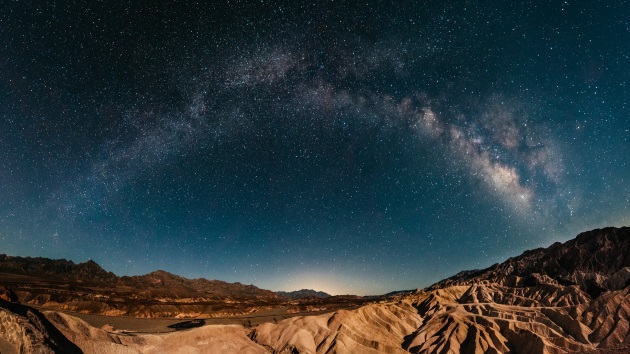
Imagine stepping into a realm where the sun scorches the earth by day, and by night, the skies become a velvety vault sprinkled with celestial gems. Death Valley National Park, the largest U.S. national park outside of Alaska, is a paradoxical sanctuary where desolation meets cosmic grandeur. Its vast networks of sand dunes, salt flats, and badlands become shrouded in darkness after sunset, revealing a kaleidoscopic sky unmatched in its clarity.
The allure of Death Valley lies not only in its terrestrial extremes but in its astronomical purity. The desert’s aridity ensures minimal atmospheric moisture, contributing to an exceptional transparency that reveals countless stars, and the Milky Way arches in spectacular clarity. Here, on a crisp desert night, the universe feels tactile, as if one could pluck a star from the sable dome. Death Valley’s unique topography and minimal light interference craft an intimate dialogue between human and cosmos, a luminous balm for those yearning to reconnect with the nocturnal wilderness.
Big Bend National Park: Texas’ Celestial Frontier
Deep within the rugged folds of West Texas lies Big Bend National Park, an epicenter of solitude and celestial wonder. This park is more than a geographical marvel; it is an astral playground cradled by the Chihuahuan Desert and the majestic Rio Grande. Big Bend’s dark skies are renowned for their purity, offering a canvas so clear that the constellations seem to dance to the rhythms of the Southwest wind.
Unlike the sprawling deserts of other parks, Big Bend’s diverse elevations—from riverbanks to soaring cliffs—create varied vantage points to behold the cosmos. The park’s distance from urban light sources fosters a nocturnal panorama where meteor showers explode like cosmic fireworks and planets gleam with an uncanny intensity. In this celestial frontier, stargazers find a sanctuary for reflection; the expanse above mirrors the vastness within, imbuing each night with a profound sense of the infinite.
Great Sand Dunes National Park and Preserve: A Symphony of Sand and Starlight
Where the earth’s shifting sands meet the vibrant pulse of the cosmos, Great Sand Dunes National Park and Preserve stands as a poetic synthesis of terrestrial and celestial wonders. Towering dunes—some reaching heights of 750 feet—rise against the backdrop of the Sangre de Cristo Mountains, framing the night sky like the proscenium of a grand cosmic theater.
Great Sand Dunes’ unique allure is its marriage of elemental forces. The cold desert air tends to silence daytime chaos, allowing an ethereal quietness to settle as night falls. This stillness enhances the star-gazing experience. The Milky Way here spills across the sky in phosphorescent brilliance, unmarred by atmospheric haze. The dunes reflect subtle moonlight, creating an otherworldly landscape bathed in silver luminescence. Observing the night sky from this undulating seascape of sand feels akin to traversing the universe itself, one grain of sand, one star at a time.
Cherry Springs State Park: Pennsylvania’s Astronomical Gem
Nestled in the rolling hills of northern Pennsylvania, Cherry Springs State Park is a sanctuary that defies its modest size by delivering an astronomical spectacle of grand magnitude. It is often heralded as one of the best places on the East Coast to gaze upon the heavens with naked eyes, telescopes, and cameras alike.
This park’s claim to fame is its exceptional darkness, achieved through deliberate management of light pollution and a geographic location far removed from metropolitan glow. Here, the night sky becomes a living mosaic where the Andromeda Galaxy is visible to the unaided eye and constellations perform their eternal ballet without disruption. Astronomers and night photographers flock to Cherry Springs to capture the cosmos in its deepest hues, embracing a nocturnal serenity that fosters both scientific inquiry and spiritual awe.
Natural Bridges National Monument: Utah’s Stony Stargate
Beyond its majestic stone arches carved by prehistoric rivers, Natural Bridges National Monument reveals another marvel—an unobstructed aperture to the universe. Perched atop a remote mesa in southeastern Utah, the park’s dark skies are a gateway, a stony stargate framed by natural architecture.
Visitors here experience a dual spectacle: geological grandeur by day and celestial splendor by night. The stability of the air, combined with minimal light pollution, creates conditions so pristine that the fainter stars, nebulae, and even the subtle hues of the Milky Way are pronounced. The interplay between earth and sky here ignites a profound sense of time’s continuum—from the formation of ancient bridges millions of years ago to the endless spiral of galaxies unfolding above.
Mauna Kea Science Reserve: Hawaii’s Heavenly Summit
Rising majestically above the Pacific, Mauna Kea offers a stargazing experience that transcends geography, perched at a summit of 13,796 feet. Though not part of the continental U.S., this iconic volcanic pinnacle deserves mention for its world-class observatories and virtually pristine skies.
The altitude, above much of the atmospheric interference, and the island’s isolated location combine to produce some of the clearest and darkest night skies on earth. Mauna Kea invites astronomers to peer deep into the universe’s origins, the stars seemingly suspended in ink-black ether above the vast ocean. The site embodies a mystic union of science and spirituality, sacred to native Hawaiians and treasured by the scientific community worldwide.
Big Cypress National Preserve: Florida’s Nighttime Everglades
Where wetlands stretch far and wide, Big Cypress National Preserve harbors a singular nocturnal charm beneath southern Florida’s subtropical skies. Characterized by dense swamps and towering cypress trees, the preserve’s night offers a divergent narrative of darkness—one alive with the sounds and shadows of unique flora and fauna illuminated faintly by stars.
In Big Cypress, the contrast between the bioluminescent life below and the infinite cosmic sprawl above creates an immersive experience. The skies here, relatively uncontaminated by urban glow due to the preserve’s remoteness, unveil constellations that guide nocturnal journeys of both animal and human. The interplay of ecosystem and astronomy invites visitors to witness night as a living process, where earthbound mystery and cosmic infinity intertwine.
Colorado National Monument: Canyon Cosmos
Perched atop the red sandstone cliffs of western Colorado, this monument is a testament to erosional artistry and celestial magnificence. The steep canyons that define the landscape during the day give way to open expanses that frame the night sky in breathtaking vistas.
At night, the park’s elevation and distance from urban centers combine with dry air to produce stellar clarity. The constellations overhead seem to echo the rugged silhouettes below, offering a symphony of light and shadow that reminds visitors of their own smallness in the grand tapestry of existence. The dark sky designation here not only protects the nocturnal habitat but preserves the timeless bond between land and sky.
Grand Canyon-Parashant National Monument: Cosmic Depths
This rugged and remote monument on the Arizona-Nevada border is an archetype of wilderness and starlight. Its vast, undeveloped landscapes create a sanctuary free from the artificial veils that often dim the stars. The sky at Parashant is a dramatic expanse where the universe’s scale becomes viscerally apparent.
The monument’s isolation ensures that visitors encounter a pristine sky awash with millions of stars, pulsating nebulae, and the sweeping arc of the Milky Way. Here, the silence of the desert night is punctuated only by the distant call of wildlife and the gentle rustling of the wind. Observing the heavens from this abyss of solitude offers a humbling reminder of the cosmos’s enduring mystery and majesty.
Black Canyon of the Gunnison National Park: Abyssal Nights
Known for its sheer, dark cliffs carved deep by the Gunnison River, this park offers not only terrestrial grandeur but spectacular views of the night sky. The canyon’s dramatic geology contributes to its atmospheric distinctiveness, providing a dark silhouette against the glittering celestial sphere.
Protected from surrounding light pollution, the park’s skies reveal vivid star fields and spectacular views of the Milky Way, forming a natural amphitheater where the universe performs nightly. The interplay of dark canyon walls and starlit skies creates a profound visual dichotomy—earth’s deep shadows contrasting with the brilliance of the cosmos.
Kendall Lakes Primitive Area: Colorado’s Hidden Starfield
Among Colorado’s lesser-known treasures is the Kendall Lakes Primitive Area, a backcountry haven that blends rugged wilderness with some of the clearest night skies in the region. Its remoteness creates a perfect sanctuary for those drawn to both solitude and stellar wonder.
The area’s elevation and absence of artificial lighting unveil a cosmic panorama where individual stars burn with crystalline purity. Here, the sense of isolation paradoxically enhances the connection to the universe, crafting an experience where nature’s silence echoes with the light-years of starlight seen overhead. Kendall Lakes invites a pilgrimage to the primordial, both earthly and celestial.
Waterton-Glacier International Peace Park: Transboundary Twilight
Straddling the states of Montana and Alberta, this transboundary park is a synthesis of towering peaks, alpine meadows, and some of the darkest skies in North America. The high altitude and protected wilderness make it a jewel for night sky enthusiasts.
Waterton-Glacier’s pristine conditions allow the Milky Way to blaze with an almost tangible glow, casting a gentle luminescence that complements the snow-capped peaks below. The park encapsulates a harmonious twilight where international cooperation conserves not only the environment but the sanctity of the night itself, ensuring that future generations can gaze upward with the same wonder.
These twelve Dark Sky Parks stand as beacons against the creeping glow of urban sprawl, each park a unique chapter in the story of America’s nocturnal landscapes. They invite visitors to step beyond the modern clutter of light and reconnect with the universe’s original poetry—the endless, enigmatic dance of stars, galaxies, and cosmic mysteries waiting just beyond the horizon of night.