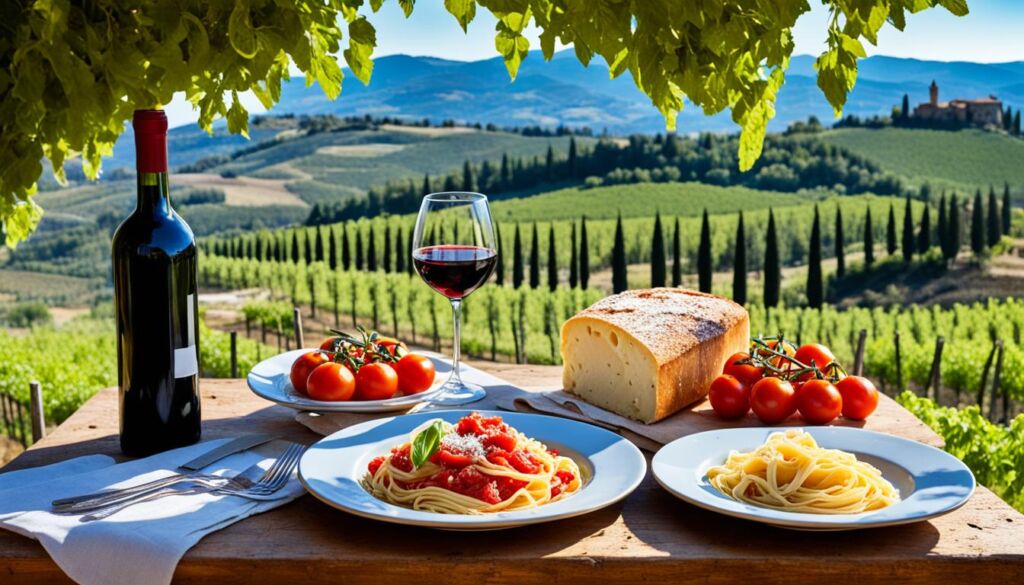
Italy’s enological and gastronomic heritage is not merely a matter of recipes and vintages; it is a visceral archive of terroir, history, and human passion. To traverse the boot from the misty hills of Piedmont to the sun-scorched fields of Sicily is to decode a palimpsest of flavors written in soil and stone. Below is a curated exploration of ten distinct wine and food tours across Tuscany, Piedmont, and Sicily, designed to immerse you in the sensory density of these storied regions.
The Architectural Aesthetics of Tuscan Brunello
In the undulating hills of Montalcino, the tour often begins not in a cellar but within the geometric precision of a medieval borgo. Visitors walk along cobbled streets that smell of damp stone and woodsmoke, stopping at a family-run *fattoria* where the production of Brunello di Montalcino is an act of devotion. The narrative here involves a vertical tasting of five vintages, each bottle a time capsule of a specific meteorological year. The guide, often a third-generation vignaiolo, explains the monastic origins of the *appassimento* method with a reverence that borders on the liturgical. The food component is equally austere: pecorino aged in a grotto, drizzled with chestnut honey, paired with a Riserva that has slept for a decade in Slovenian oak.
The Truffle and Barolo Symbiosis in Piedmont
Piedmont offers a tour that is less about sightseeing and more about subterranean excavation. Here, the primary focus is the white truffle of Alba, a fungal gem so aromatic it can perfume an entire room from a single shaving. The experience starts at dawn with a *trifulau* and his Lagotto Romagnolo dog, following the animal’s snout through misty, dew-laden woods. After the hunt, the morning culminates in a farmhouse kitchen where a *tajarin* pasta, made with egg yolks so orange they seem irradiated, is tossed in butter and topped with freshly shaved truffle. The wine pairing is, of course, Barolo. But not just any Barolo—a single-vineyard specimen from Cannubi or Monfortino, whose tannic structure cuts through the unctuous fat of the pasta.
Salt Roads and Capers of the Sicilian Aeolian Islands
Sicily’s coastal tours offer a stark, saline counterpoint to the inland richness. On the island of Salina, a tour focuses on the capers of Malvasia and the caper bush. The reader is taken on a cliffside walk, where the wind carries the scent of wild fennel and sea salt. The producer demonstrates how caper buds are picked by hand at dawn, then barreled in sea salt and vinegar for months. This is not a tasting of luxury but of survival; the briny, piquant caper is paired with a fresh, volcanic Pantelleria Zibibbo. The narrative shifts to the *mattanza*—the ancient tuna harvest—though most tours now focus on the bottarga of the island, a pressed, cured fish roe that tastes profoundly of the Mediterranean sun.
Chianti Classico and the Olive Grove Circuit
Departing from the super-luxury of Brunello, a tour through the Chianti Classico zone offers a more accessible but no less rigorous experience. The route snakes through the Gallo Nero territory, stopping at a *frantoio* (olive mill) before the winery. The focus here is on the second pressing of the olive, the *olio nuovo*, which is a vibrant, chlorophyll-green emulsion that burns the throat. The tour guide explains the concept of *terroir* not just for wine but for oil—the difference between a Frantoio olive grown in clay versus schist. The wine tasting is a comparative study of a 2019 and a 2020 Chianti Classico, demonstrating how a cool, wet vintage creates angular, acidic wines versus the round, jammy profile of a dry, hot year.
The Nebbiolo Puzzle and the Roero White
In Piedmont’s Roero region, a less-traveled corridor, the tour unravels the mystery of Nebbiolo’s finicky nature. Visitors descend into a *cantina* carved from tufa stone, where the humidity is perfect for aging. The narrative here is geological: the guide points out the fossilized seashells embedded in the cave walls, evidence that this land was once a primordial seabed. The tasting includes a rare white wine from the Roero Arneis, a variety that is notoriously difficult to grow but produces a wine of lemon rind and almond dust. The food pairing is a *vitello tonnato*, the cold veal dish with a creamy tuna sauce, whose richness is a perfect foil for the Arneis’s acidity.
Volcanic Nebbiolo and Pistachio of Mount Etna
No tour of Sicily is complete without confronting the volcano. On the northern slopes of Mount Etna, winemakers cultivate Nerello Mascalese vines in soil that is black, brittle, and rich with minerals. This tour is physically demanding: clients hike over lava flows from 2002, past chestnut forests and ancient *palmenti* (stone wine presses). The tasting is a vertical of Etna Rosso, which often smells of smoke, dried cherry, and iron. The food component is the pistachio of Bronte, a nut so vibrant it turns the tongue green. It is used in a pesto served with *busiate* pasta, a spiral shape that catches the grainy, nutty sauce perfectly. The wine is served slightly chilled, a necessary correction for the volcanic heat.
The Super-Tuscan and the Bistecca Fiorentina
This tour centers on the coastal Maremma region, the birthplace of the Super-Tuscan movement. The experience is one of scale and ambition. Visitors walk through vineyards planted with Cabernet Sauvignon and Merlot, a deliberate rejection of tradition. The narrative is about the 1970s rebellion against Italian DOC laws, a story of modernism and wealth. The tasting culminates with a Sassicaia or a Tignanello, wines built for cellaring. But the true spectacle is the food: a Bistecca Fiorentina, a three-inch-thick Porterhouse steak grilled over embers of olive wood. The meat is so rare it is nearly bleeding, served with a simple wedge of lemon and a chiffonade of arugula. The tannins of the Super-Tuscan scrape the fat from the palate, creating a cycle of consumption that feels primal.
Marsala, Caciocavallo, and the Western Sicilian Baroque
In western Sicily, the tour takes on a moody, baroque character. The destination is a *cantine* outside of Trapani where Marsala wine is made not as a sweet dessert, but as a dry, oxidative *vergine* wine. The cellar resembles a cathedral, filled with *solera* systems of stacked barrels. The guide discusses the English merchants of the 18th century who invented Marsala as a fortified alternative to sherry. The tasting is a flight of Marsala from a 10-year-old to a 30-year-old, each darker and more nutty. The food is a cheese tasting of caciocavallo, a pear-shaped, stretched-curd cheese that is aged in a cave and sometimes packed with saffron. The saltiness of the cheese interacts with the caramel of the wine to create a lingering, savory finish.
The Vermouth Revival and the Alpine Cheeses of Gattinara
Piedmont’s northern reaches, around Gattinara and Lessona, offer a tour focused on the rebirth of artisanal vermouth. Here, the wine is Nebbiolo again, but grown on porphyry soils that give it a ferrous, granite-like structure. The tour includes a visit to a small distillery where the winemaker macerates wormwood, rhubarb root, and gentian in a base of the local wine. The result is a vermouth that is dry, spicy, and complex, nothing like the sweet cocktail mixer. The food pairing is a rack of *toma* cheese, a semi-hard alpine wheel that is aged under dirt and hay. The cheese is crumbly and slightly ammoniated, a perfect contrast to the bitter, botanical vermouth.
The Passito Pantelleria and the Almond Harvest
The final tour takes place on the island of Pantelleria, a speck of volcanic rock closer to Africa than Sicily. Here, the wine is Zibibbo (Muscat of Alexandria), grown in a system of dry-stone walls and sunken vines called *vite ad alberello*. The tour begins at dawn in the almond groves, where the nuts are gathered from the ground. The focus is on the *Passito di Pantelleria*, a sweet wine made from sun-dried grapes. The production is brutal: every grape is hand-picked and dried on mats for three weeks, concentrating its sugar to a near-syrupy intensity. The tasting is a meditation on sweetness: the wine has notes of dried apricot, sage, and honey. The food is the *granita di mandorla*—a coarse, hand-churned ice made from the local almonds that are green and milky. The granita melts into the wine, creating a frozen, fragrant slurry that is the perfect conclusion to a journey defined by extremes of heat, salt, and stone.