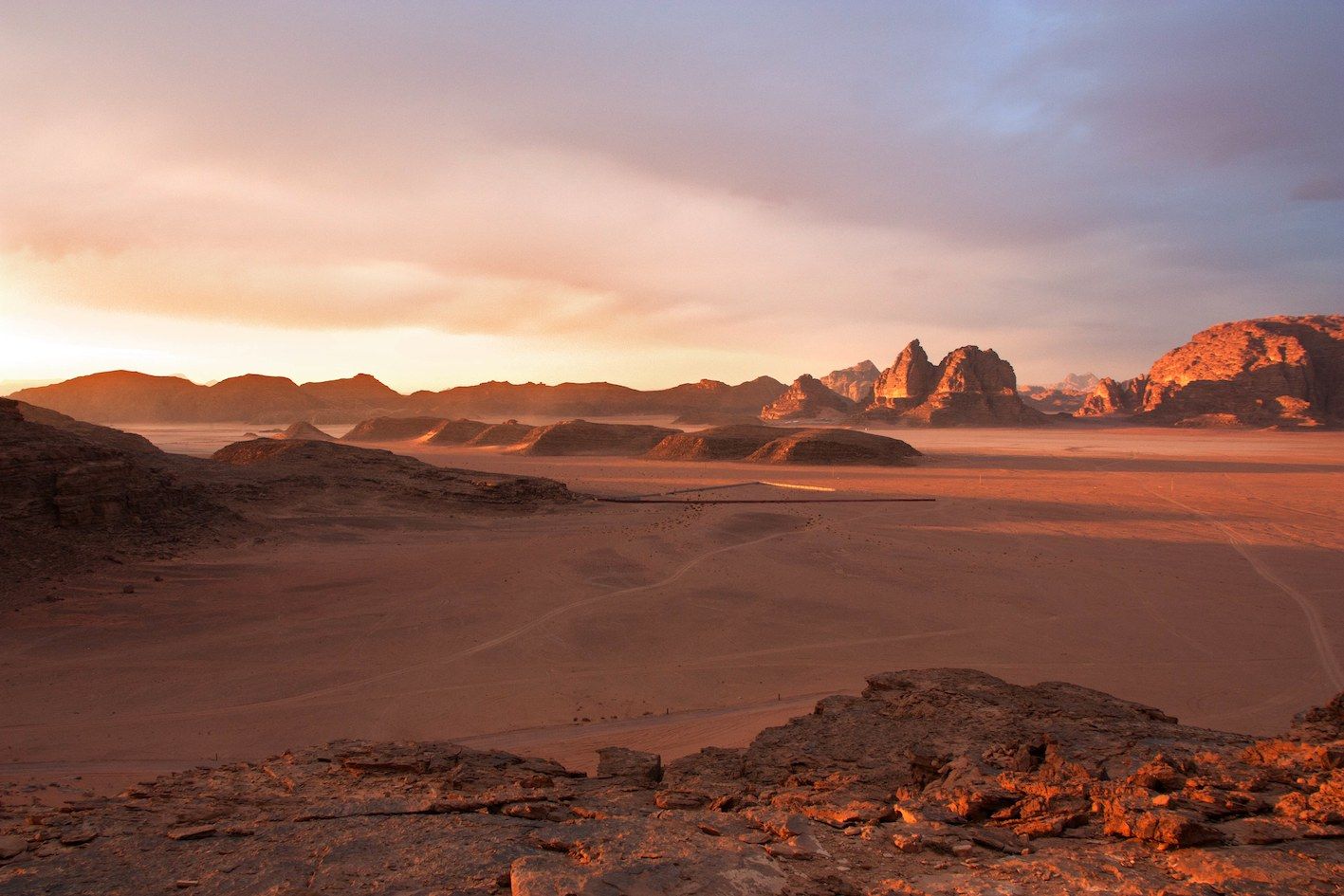
Jordan is a land where the whispers of ancient winds still linger in the rustle of desert dunes, where the crimson cliffs stand as silent witnesses to centuries of human drama. It is a place where the cinematic lens has found its muse, transforming its rugged landscapes into the backdrops of legendary tales. From the sweeping deserts that once cradled the footsteps of Lawrence of Arabia to the otherworldly vistas that became the stage for interstellar sagas like *Dune*, Jordan’s terrain is a character in its own right—mysterious, vast, and endlessly cinematic. For the intrepid traveler, these filming locations are not just postcard-perfect spots; they are portals into stories that have shaped our collective imagination. Let’s embark on a journey through 11 of Jordan’s most evocative filming locations, where every grain of sand and every jagged rock holds a secret from the silver screen.
The Crimson Dunes of Wadi Rum: Lawrence’s Endless Sea
Wadi Rum, a vast desert valley carved by time and wind, is a place where the horizon dissolves into a shimmering mirage of ochre and crimson. It was here that David Lean’s *Lawrence of Arabia* (1962) unfurled its epic tapestry, with Peter O’Toole’s T.E. Lawrence riding into the frame like a specter against the endless dunes. The desert’s silence is not empty; it hums with the echoes of Bedouin life, the clatter of camel hooves, and the haunting call of the *rababa*, a stringed instrument that seems to mimic the desert’s own voice. To stand atop the red sands of Wadi Rum is to tread where legends walked, where the line between myth and reality blurs like the heat haze on the horizon. The dunes here are not mere sand—they are the skeletal remains of a forgotten world, waiting to be reawakened by the imagination.
The Siq of Petra: A Canyon’s Cinematic Embrace
Petra, the rose-red city carved into the cliffs of Jordan, is a marvel that defies time itself. The Siq, a narrow gorge that serves as the gateway to this ancient wonder, is a cinematic masterstroke—a natural corridor that frames the first glimpse of the Treasury like a perfectly composed shot. This was the stage for *Indiana Jones and the Last Crusade* (1989), where Harrison Ford’s quest for the Holy Grail led him through Petra’s labyrinthine depths. The Siq is more than a path; it is a threshold between worlds, a place where the past and present collide in a symphony of stone and shadow. As you walk its winding route, the air grows cooler, the cliffs tighter, and the anticipation builds—until the Treasury bursts into view, a revelation as breathtaking as any cinematic reveal.
The Desert Fortress of Azraq: A Bastion of Shadows
Azraq Castle, a 13th-century fortress nestled in the heart of the Jordanian desert, is a place where history and cinema intertwine like the roots of an ancient tree. This was the command post for Lawrence of Arabia’s guerrilla campaigns, a strategic stronghold that became a symbol of resilience against the Ottoman Empire. The fortress’s weathered walls, bathed in the golden light of dusk, exude an aura of quiet defiance. It was here that Lawrence and his Arab allies plotted their daring raids, their silhouettes flickering against the stark desert backdrop. Today, the castle stands as a silent sentinel, its shadows stretching long in the afternoon sun—a reminder that even the mightiest empires crumble, but the stories they leave behind endure.
The Otherworldly Landscapes of Wadi Rum’s Seven Pillars of Wisdom
Wadi Rum’s Seven Pillars of Wisdom—a cluster of towering rock formations—are named after T.E. Lawrence’s memoir, a literary monument to his adventures in the desert. These monoliths, jagged and imposing, rise from the earth like the fingers of a colossal hand, their red and orange hues shifting with the angle of the sun. They were immortalized in *Lawrence of Arabia*, where they served as a dramatic backdrop for the film’s most iconic scenes. To stand before them is to feel the weight of history pressing down, a reminder that some places are not just locations but characters in the grand narrative of human endeavor. The wind here carries the scent of sagebrush and the faintest whisper of Lawrence’s own words, carried on the desert breeze.
The Ancient Ruins of Jerash: Rome’s Echo in the Levant
Jerash, one of the best-preserved Roman cities outside Italy, is a place where antiquity feels alive. The colonnaded streets, the grand hippodrome, and the towering arches of the Oval Forum are a testament to the architectural prowess of a bygone empire. This was the setting for *The Mummy Returns* (2001), where the ancient city became a battleground for supernatural forces. To wander through Jerash is to step into a time capsule, where the past is not a distant memory but a living, breathing entity. The ruins here are not mere relics; they are the stage upon which history’s greatest dramas have played out, from gladiatorial combats to cinematic battles that span millennia.
The Mystical Springs of Ma’in: A Desert Oasis of Serenity
Tucked away in the rugged mountains of Jordan, the Ma’in Hot Springs are a hidden gem where the desert’s harshness gives way to a sanctuary of warmth and tranquility. These thermal pools, fed by natural springs, have been a place of healing and reflection for centuries. Their ethereal beauty was captured in *The Martian* (2015), where Matt Damon’s stranded astronaut found solace in the stark yet serene landscape. The contrast between the steaming waters and the surrounding cliffs is a visual paradox—life thriving in the midst of desolation. To bathe in these waters is to commune with the earth itself, to feel the pulse of a planet that has nurtured both man and myth for eons.
The Coastal Charms of Aqaba: A Jewel of the Red Sea
Aqaba, Jordan’s sole coastal city, is a place where the desert meets the sea in a dazzling display of natural beauty. Its turquoise waters and coral reefs have lured travelers for centuries, and its cinematic appeal is undeniable. The city’s underwater world was featured in *The Hurt Locker* (2008), where the Red Sea’s depths became a battleground for modern warfare. But Aqaba is more than a cinematic backdrop; it is a living, breathing entity—a place where the salty tang of the sea mingles with the spice of the souk, where the past and present coexist in harmony. To sail its waters or dive its reefs is to touch the pulse of a city that has been a crossroads of civilizations for millennia.
The Rugged Terrain of Dana Biosphere Reserve: A Wilderness Untamed
Dana Biosphere Reserve is a place where nature reigns supreme, a vast expanse of rugged mountains, deep canyons, and lush valleys that have remained largely untouched by time. This pristine wilderness was the setting for *Theeb* (2014), a Jordanian film that captured the harsh beauty of the desert through the eyes of a young Bedouin boy. To explore Dana is to step into a world where the rules of civilization do not apply, where the only law is the law of the wild. The reserve’s diverse ecosystems—from oak forests to dramatic cliffs—offer a cinematic palette of colors and textures, a testament to the resilience of life in even the most inhospitable of environments.
The Timeless Villages of Umm Qais: A Window into the Past
Umm Qais, a hilltop village overlooking the Sea of Galilee and the Golan Heights, is a place where history is etched into every stone. The ruins of the ancient Decapolis city of Gadara, with its grand theater and colonnaded streets, are a window into a world that once thrived under Roman rule. This was the setting for *The Message* (1976), a film that explored the early days of Islam through the lens of its founder’s life. To wander through Umm Qais is to walk in the footsteps of prophets and emperors, where the past is not a distant memory but a living presence. The village’s quiet charm, with its stone houses and olive groves, offers a stark contrast to the grandeur of its ruins—a reminder that even the mightiest civilizations are built upon the quiet lives of ordinary people.
The Enigmatic Desert of Al-Azraq: A Place of Solitude and Reflection
Al-Azraq, a small town in the heart of Jordan’s eastern desert, is a place of solitude and reflection, where the vastness of the landscape invites introspection. This was the setting for *Theeb*, where the desert’s harsh beauty became a character in its own right. The town’s name, which means “blue” in Arabic, refers to the oasis that has sustained life in this arid region for centuries. To visit Al-Azraq is to confront the raw power of nature, where the sun beats down relentlessly and the wind carries the scent of sagebrush and dust. It is a place where the modern world feels distant, where time slows to a crawl, and where the only soundtrack is the whisper of the desert itself.
The Majestic Wilderness of Dana to Feynan: A Journey Through Time
The journey from Dana Biosphere Reserve to Feynan Lodge is a pilgrimage through some of Jordan’s most breathtaking landscapes, where the past and present collide in a symphony of stone and sand. Feynan, a remote eco-lodge nestled in the Dana Valley, offers a glimpse into a way of life that has remained unchanged for centuries. The lodge itself is a marvel of sustainable design, built from local stone and powered by solar energy. To stay here is to disconnect from the modern world and reconnect with the rhythms of nature. The surrounding wilderness, with its dramatic cliffs and hidden valleys, is a cinematic dreamscape—a place where the stories of the past feel as vivid as the present.